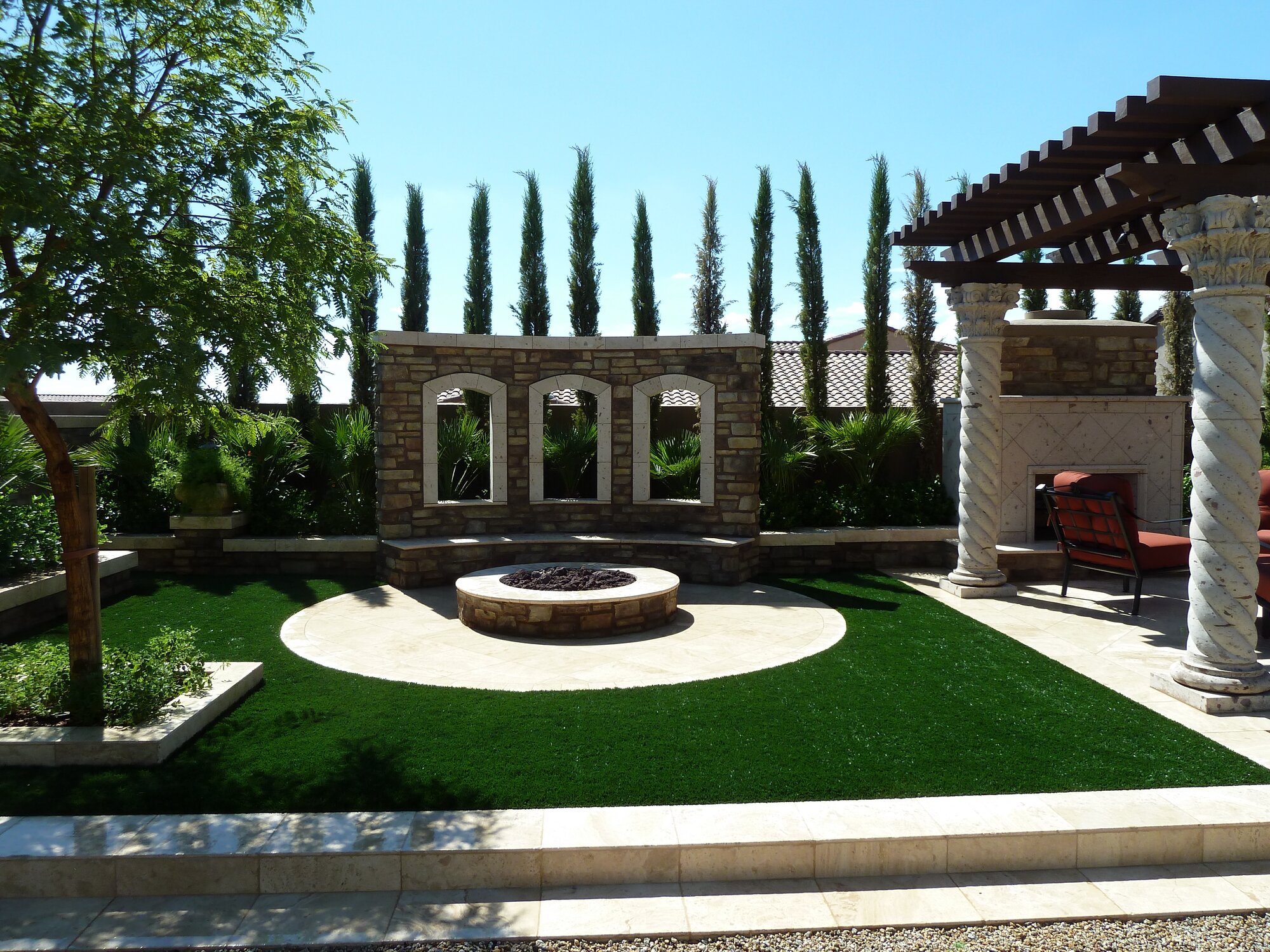
Short answer: Most artificial turf in Arizona lasts 10 to 15 years. On a typical home, it pays for itself in about five years. I have personally seen turf still in service at 20 years.
My name is Mary Clanton. I have spent 17 years installing turf, and Arizona Turf Masters has been doing it across Arizona since 2006. Whether it is a backyard, an HOA common area or a commercial landscape, nobody wants to spend real money without knowing how long it will last. That is a fair question, and it deserves a straight answer instead of a sales number.
How long does artificial turf last in Arizona? Typically 10 to 15 years. That's a planning number, not a promise. Where your yard lands in that range depends on the product you choose, how much sun it takes, how hard it gets used, and how well it's cared for.
When does turf pay for itself? On a typical home yard, the return on the investment comes in around five years, depending on the water bill and upkeep. Our 13-year commercial case study estimated payback at 4 to 5 years.
What ages turf in Arizona? Mostly the sun. UV degradation can happen prematurely here; the signs are covered below. Wear from foot traffic and pets adds to it. Reflected heat from windows and hot objects is a separate problem. It can melt fibers in an afternoon, and that is damage, not aging.
How should an HOA or commercial property plan for it? Like any other capital item, with a useful life and a replacement cost in the reserve study or capital plan. The HOA section below walks through it.
Who covers it if it wears out early? The turf itself is warranted by its manufacturer, typically for 8 to 15 years on the turf we install, under that manufacturer's terms. Arizona Turf Masters warrants the installation for two years from completion.
The honest answer is a range
Artificial turf typically lasts 10 to 15 years in Arizona. I have personally seen turf that is 20 years old. But times have changed. Manufacturing processes have changed, and so have warranties, so I am not going to promise you my best case. Ten to fifteen years is the safe average, and it is the number I would plan around.
The math works inside that window. How fast your yard pays back depends on what you spend now on water, mowing and repairs, and once it has, the savings keep adding up for the rest of the turf's life. Our post on the real numbers behind a lawn upgrade shows you how to figure your own.
Of the four things that decide where a yard lands, sun and use we can look at before we ever start, and care is in your hands. A product problem, like early UV degradation, cannot be seen ahead of time, and that is why it goes to the manufacturer. A front lawn people mostly look at lives a different life than a backyard with kids and dogs, and both live a different life than a community entrance that takes foot traffic all day.
"Amazing work! Professional end to end service. I could not have been happier with the outcome. So glad I didn’t complete initial attempts to DIY the artificial grass. Huge area completed fast, great detail, quality and service! Would recommend to anyone."
Charles G., 5-star Google review
Reflective glare: window melt is its own problem
This one gets its own section because it is not aging, and it is not wear. Reflected glare can damage turf that is otherwise brand new.
Energy-efficient Low-E window glass, especially on a west-facing wall, can bounce sun onto turf hot enough to melt the fibers. The glass acts like a magnifying glass and concentrates the reflection into a hot spot. That is not turf wearing out. It is a melted spot, and it can happen in a single afternoon.
Windows are the most common source, but they are not the only one. Reflective glare can come from anything that bounces or concentrates the sun: a pool floatie, a curved plastic toy left sitting on the turf, any reflective surface aimed the wrong way at the wrong hour. And it does not have to be a reflection at all. A cinder block wall baking in the afternoon sun gets hot enough to melt the turf directly next to it. I have seen it happen.
Melting from reflected or radiant heat is not covered by Arizona Turf Masters or by the turf manufacturer, so the best fix is catching the risk before the turf goes in. We look for Low-E glass on every estimate, and our service agreement advises sun screens on windows near the turf. Exterior screens break up the reflection before it can focus. If you already have a melted patch, our post on why there is a melted section in your turf walks through it.
Our team will come to your home or job site, look at the sun, the windows and how the space gets used, and tell you what that means for the turf you choose. Call (480) 751-4343.
Schedule a Free On-Site Estimate →UV degradation: what the Arizona sun does to turf
Turf fibers are made with UV protection. Even so, in Arizona UV degradation can happen prematurely, ahead of that 10 to 15 year range. When it does, it is a product issue, and it goes to the manufacturer.
Fading or streaking. Color that washes out, or streaks across the turf, beyond the manufacturer's normal tolerances. Light and dark rows that look like lawn mower lines are normal. That is just the direction the blades lay, not UV damage.
Broken fiber blades. Blades of grass that snap or break off instead of standing back up.
Bald spots. Patches where the blades have broken away and the turf has thinned out.
If you see it, here is what to do.
- Take pictures of the damaged areas.
- Contact the supplier of your turf. They will want the pictures to submit to the manufacturer.
- Do not wait. Claims have deadlines. Some manufacturer warranties require the claim in writing, with photos, within 30 days of the issue becoming evident.
"They installed turf in our backyard several years ago. Recently we noticed the larger section of our turf started fading and the blades of turf were pulling out easily. We contacted Frank and he helped us file a warranty claim. It was simple paperwork and a few photos and it was approved. Re-install of new turf was scheduled the following week."
Misty P., 5-star Google review
Coverage terms vary by product, so keep the warranty paperwork for the product you selected.
What helps is simple. Shade where you can get it. A product chosen for how the space will actually be used. And keeping harsh chemicals off the fibers, because bleach and petroleum solvents can strip that UV protection. Our turf maintenance guide lists what to skip.
What helps turf last longer
- The right product for the job. Turf that takes heavy traffic needs a different product than a lawn people mostly look at. Nylon is the most resilient of the turf fibers. Twenty years of history gives us the knowledge to help advise you on the right one.
- A real base underneath. Our installed price includes up to 3 inches of base material, not just the turf on top. The base is what the turf sits on, which is why the water items below matter as much as they do.
- Broom the high-traffic areas, regularly. Fibers that are allowed to stay laying over develop a memory, and once they learn to lay down they stop standing back up on their own. Brush the traffic lanes against the grain to keep the blades upright. A stiff broom works on a small area, a power broom on a bigger one. Rinse off the dust while you are at it.
- Keep an eye on the irrigation. Some homeowners choose to leave their sprinklers in place, since a shared zone may also be watering the trees and plants at the edge of the yard, and that is fine. What matters is how much water lands on the turf, and for how long. Watch for leaks in lines running under or beside the install, and don't let heads run on the turf for extended periods. Constant moisture softens and shifts the base the turf sits on, and that is where the damage is done. Our service agreement is plain about this: excessive sprinkler run time on the turf can void the warranty on the base. So keep the run times reasonable, redirect heads where you can, and repair leaks as soon as you find them. And if you choose to leave irrigation in place, we will ask you to sign a waiver acknowledging that any repairs caused by that irrigation are the homeowner's responsibility. Your estimator will go over it with you before installation, so there are no surprises later.
- Watch the roofline. Runoff from the roof and gutters lands in the same drip line every storm, and that concentrated flow can erode and wash out base material at the turf's edge. Downspouts should discharge away from the turf, not onto it or right at its border. If your gutters overflow in one spot, that spot is working on your base every time it rains.
- Infill top-ups. Infill settles and compacts over time. Topping it up every 3 to 5 years keeps the blades upright and the surface performing.
- Keeping heat and sharp things off it. Keep grills and fire pits on a hardscape buffer, like a paver pad, never directly on the turf. No fireworks, no metal rakes, and no parked vehicles.
On every estimate, we look at sun exposure and windows, sprinkler coverage and leaks, and how the space actually gets used. We will also ask you where the roof runoff lands and which corner stays wet, because you have seen your yard in a storm and we have not. Some conditions, like reflective glare, intermittent leaks and rain-only runoff, cannot always be seen in one visit, so property owners share responsibility for noting and reporting them before installation. Catching these before the turf goes in gives it the best shot at the long end of that 10 to 15 year range.
For HOAs, property managers and commercial sites
Common areas, entrances, parks and commercial landscapes face the same sun as a backyard, plus a lot more feet. The planning range is the same 10 to 15 years. The decisions that push a property toward the long end are the same too, just made at a bigger scale and written into a budget.
- Plan it like any other capital item. Give the turf a useful life, a replacement cost and an annual contribution in the reserve study, so replacement is funded instead of landing as a special assessment, and revisit the numbers as the turf ages. Our post on turf in your HOA's reserve study walks a board through it.
- Match the product to the traffic. Entrances, walkways and play areas need a turf built for daily use. We provide free HOA submittal packages with the product data sheet, spec and photos.
- Put it on a maintenance schedule. Power brooming, infill replenishment and deep cleans on a set schedule keep high-traffic turf performing. We offer maintenance plans for exactly that.
- Write the spec before the bid. A clear specification keeps every bidder on the same product and base. Our guide to commercial artificial turf specifications covers what belongs in one.
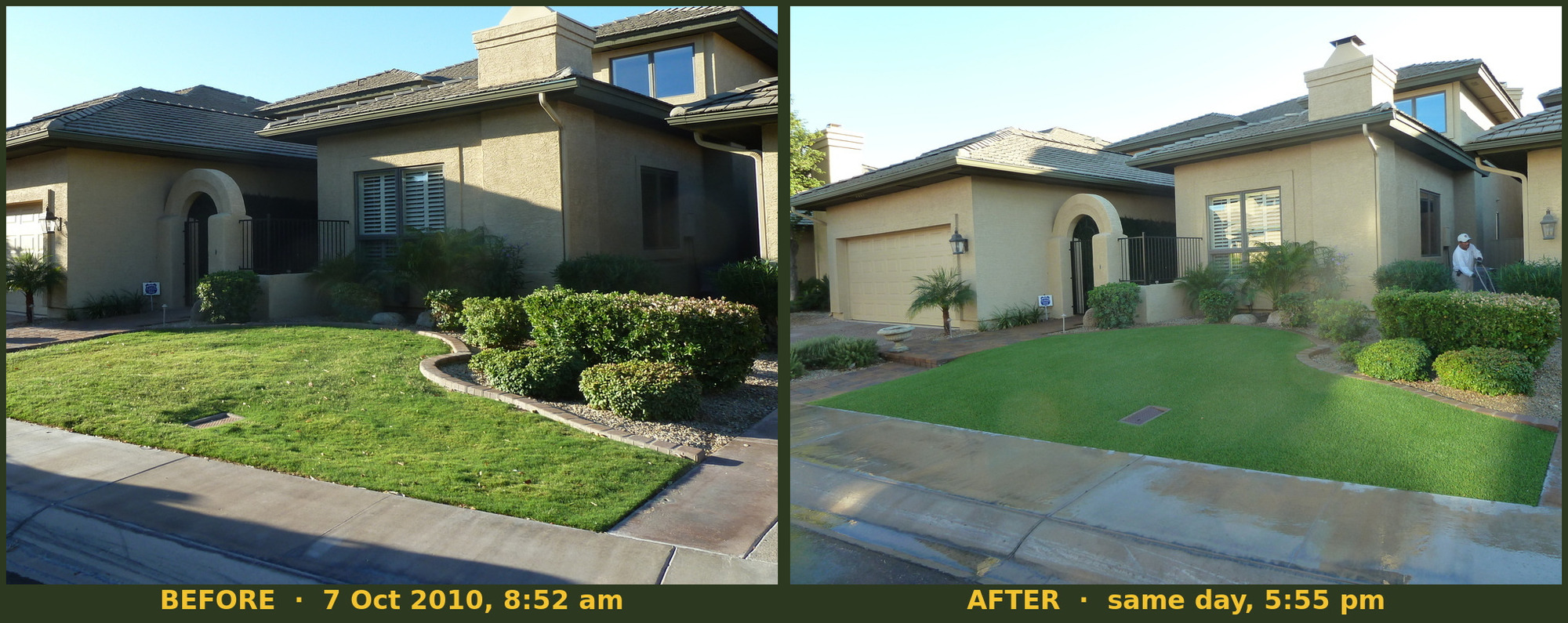
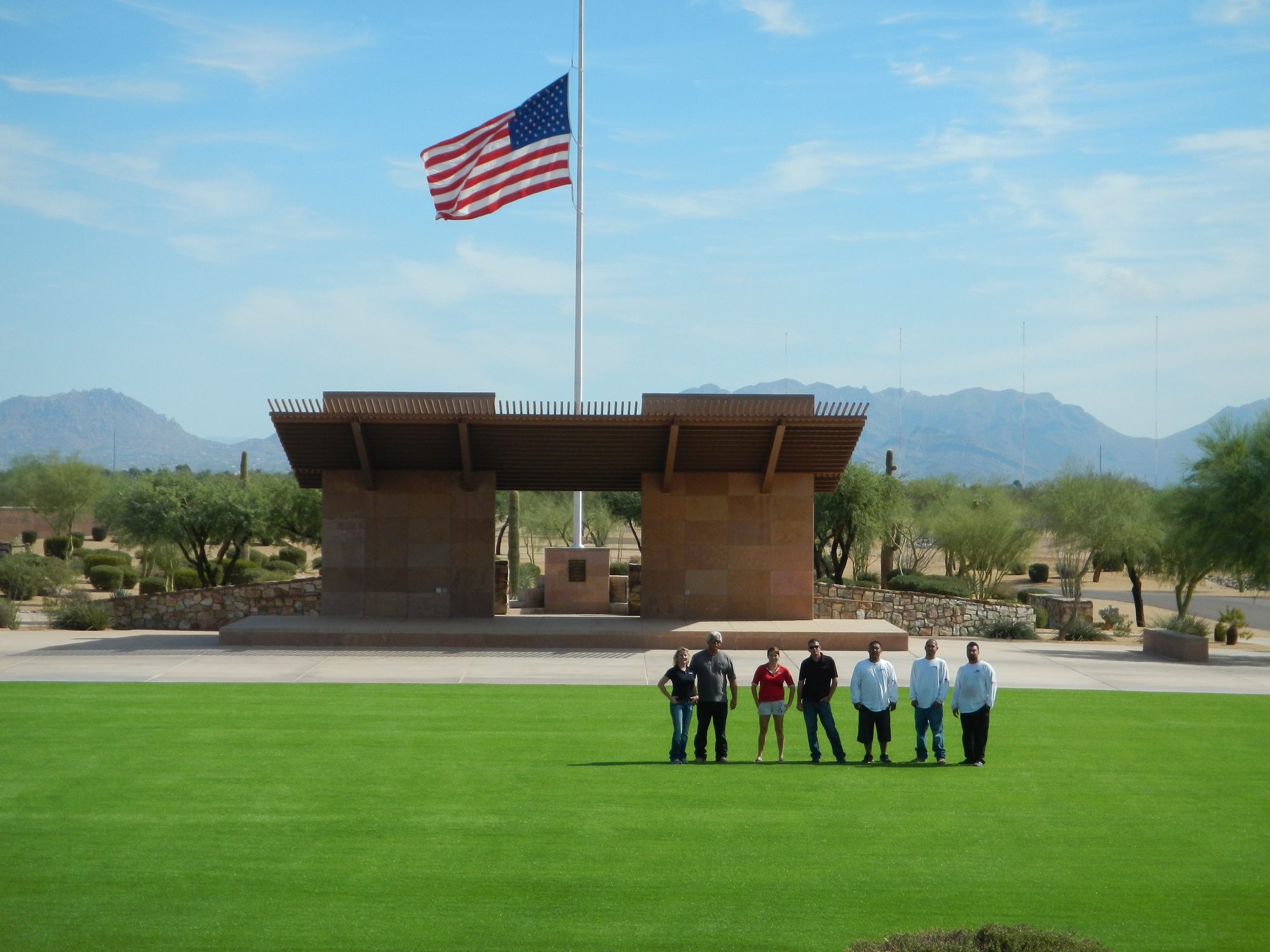
Read the full numbers in our 13-year turf conversion case study.
Board member or property manager? Ask us for a free HOA submittal package or a replacement estimate for your reserve study.
Who warrants what, and for how long
This is where people get crossed up, so here it is plainly.
| Who | What they cover | For how long |
|---|---|---|
| The turf manufacturer | The turf product itself | Typically 8 to 15 years on the turf we install, set by that manufacturer's limited warranty |
| Arizona Turf Masters | The installation workmanship | Two years from the date of completion |
Terms differ by product, so we show you the actual warranty for the product you select. A manufacturer warranty can be prorated, meaning the coverage shrinks as the years go on, and it may pay toward material only, not installation labor. After our two-year installation warranty, a re-installation fee may apply. Knowing that up front beats learning it in year eight, and for a board or property manager it belongs in the replacement budget.
When is it time to replace your turf?
If broken blades or bald spots show up early, take pictures and contact the supplier of your turf, as covered above.
Some matting is normal, and it is not failure. Blades that lay flat do not mean your turf is bad or failing, and no manufacturer warranty covers matting. Turf can last for years laying flat. Brushing against the grain and topping up the infill help lift it back up.
The true end of life signs are balding, turf that is completely matted, and backing that is breaking down. When the blades have worn away into bald areas, the whole surface is matted down, or the backing is breaking down, the turf is past its useful life and it is time to replace it.
Replacing for looks is a choice. If your turf is over 8 to 10 years old and you want it to look brand new again, that is when replacement is worth considering. That is a decision about appearance, not a sign the turf has failed.
One damaged area does not always mean the whole install is done. We can patch damaged areas, but we cannot patch turf that is past its useful life. At that point, replacement is the answer.
Turf is not forever, and it is not a no-maintenance surface. It ages in the Arizona sun like everything else outside. What you control is the product you choose, where and how it gets used, and whether it gets the simple care it needs. Get those three right and you get the most years out of it.
Turf gets hot in a Phoenix summer. That is the trade for no lawn watering and no mowing, and shade, a quick rinse and the right product help.
Frequently asked questions
Does artificial turf break down in the Arizona sun? Turf fibers are made with UV protection, but UV degradation can happen prematurely here. Watch for fading or streaking beyond normal tolerances, broken fiber blades and bald spots. If you see them, take pictures and contact the supplier of your turf, who will submit them to the manufacturer.
How long does turf last in high-traffic HOA or commercial areas? Start with 10 to 15 years as a planning number, then adjust for how heavy the traffic is and how well the turf is maintained. We help boards and property managers set realistic numbers for their reserve study or capital plan.
How long does turf last with dogs? Pets add wear, and damage from digging or chewing is not covered by our installation warranty. A pet-appropriate system and regular rinsing help a dog area age well. Our post on keeping dog turf fresh covers how we build one.
Is matting covered by warranty? No. No manufacturer warranty covers matting, and flat blades do not mean the turf is failing. Turf can last for years laying flat, and brushing plus an infill top-up help lift it.
Does the infill need to be replaced? Topped up, not replaced. It settles over time, and a top-up every 3 to 5 years keeps the blades standing.
When the turf wears out, does the base have to be redone? Not always. A properly built base is often reusable, so replacing turf usually costs less than the original install. We look at the base when the time comes.
Does the turf warranty transfer if the property sells? It depends on the manufacturer. Some product warranties cover the original owner only, so ask about the specific product before you count on it.
Why aren't you the least expensive bid? Because of what is in the price. Our install includes up to 3 inches of base material and a two-year installation warranty, on top of the turf itself. Those line items are where the real difference between bids lives, so compare them side by side.
Whether it is your backyard or a community entrance, our team will come out, look at the sun, the traffic and the windows, and help you choose a turf built for how the space gets used. Turf installs run $6.00 to $12.00 per square foot installed. Minimums do apply. That price includes our two-year installation warranty. Free HOA submittal packages on request. Licensed, bonded and insured, AZ ROC 234276, with a 4.6 star rating across more than 300 reviews. Call (480) 751-4343. Serving Arizona since 2006.
0% financing available. No interest if paid in full within 18 months, on approved credit. Credit is extended by Synchrony Bank. See financing options.
Get My Free On-Site Estimate →
Director of Operations at Arizona Turf Masters and the voice of Turf Talk, with 17 years in Arizona turf. Arizona Turf Masters has installed turf across the state since 2006. Licensed Arizona contractor ROC 234276.
Read Mary's bio →