I have spent 17 years installing turf, and Arizona Turf Masters has been doing it across Arizona since 2006. This October, after storm after storm rolled through the state, homeowners started asking me a new question: with all that rain, is the water problem handled? It is a fair question, and this fall the answer is more interesting than usual, because part of it is genuinely good news.
Quick Answers
Did the October storms help Arizona's water?
Yes, in real and measurable ways. Arizona's drought map shrank dramatically this fall, and Lake Powell rose about 7 feet in two weeks.
Did they fix the Colorado River crisis?
No. The system is still only about a quarter full, and Lake Mead set a new all-time record low the same week Lake Powell was rising.
Why doesn't Phoenix rain refill our reservoirs?
Because most rain that falls on the Valley never reaches the Colorado River. Reservoir water comes mainly from winter snowpack in the mountains of Colorado, Utah, and Wyoming, melting slowly in spring.
What can a homeowner actually control?
Your own outdoor watering. Landscape irrigation is the largest discretionary water use in most Arizona households, and it is the one piece of this problem with your name on it.
What Actually Fell From the Sky
Our monsoon was, on paper, average. Phoenix Sky Harbor recorded 2.5 inches against a normal of 2.43. But it ran almost 3 degrees hotter than normal, and a good share of that rain arrived at the very end, helped by moisture from Hurricane Polo in late September.
The real story came after monsoon season ended. Remnants of Hurricane Rachel brought rain and early mountain snow across the Southwest on October 10 to 12. Then, on October 21 to 24, the remains of Hurricane Trudy fed a slow-moving storm that parked over the Four Corners. Arizona saw its first Tornado Watch in more than 16 years, 3-inch hail south of Flagstaff, and destructive flooding from Clifton to Tuba City. In the San Juan Mountains of southwest Colorado, 2 to 6 inches of rain fell, and the San Juan River rose to levels not seen in a century.
That last detail is the one that matters for water, and here is why.
One Reservoir Really Did Gain
The San Juan River flows into Lake Powell. Because that flood water fell inside the Colorado River basin, in the headwaters where it counts, Powell captured it. Between October 11 and October 25, Lake Powell gained roughly 400,000 acre-feet and rose about 7 feet, including some of the strongest single-day inflows the reservoir has recorded in years. Powell's cushion above the level where it can no longer generate power grew from about 29 feet to about 36 feet. That is real water, and real breathing room.
Closer to home, the improvement was easy to see. In early August, nearly 90 percent of Arizona was in drought. By October 20, that figure was down to about 41 percent. Pastures greened up, soils recharged, and the Valley got its first sub-80-degree highs in months.
The Same Week, Lake Mead Hit Bottom
Here is the part that did not make the weather reports. On October 22, while Powell was rising, Lake Mead dropped to 1,037.16 feet, the lowest level ever recorded there. Mead does not rise when it rains upstream. It rises when water is released down from Powell, and current federal policy is doing the opposite, holding Powell up to protect it. Combined, Mead and Powell are still only about 25 percent full, and they hold roughly 3.3 million acre-feet less water than they did a year ago.
That is why the 2027 Colorado River delivery cuts I wrote about in my overseeding post are still coming. Arizona's 760,000 acre-foot reduction is the largest of any state, and one wet fall, welcome as it is, does not change them. Last winter's Upper Colorado snowpack peaked at only about 72 percent of normal. Reservoirs are refilled by snowpack, year after year. They are not refilled by a flood, not even a historic one.
What This Winter Could Change
There is one genuine reason for optimism, and it is not the rain we already got. It is the rain and snow that may be coming. NOAA's winter outlook, released October 15, calls for a strong to very strong El Nino, which favors a wetter-than-average winter across Arizona and the southern tier. If that moisture lands as snow in the Colorado River headwaters, this winter could do what October could not. If it lands as warm rain in the desert, it will be another beautiful storm that the reservoirs mostly miss. We will know by spring.
What Your Yard Has to Do With It
None of this is a reason to panic, and I want to be plain about that, the same way I was in the overseeding post. Your tap will not shut off. Valley cities plan for drought in stages, and a wet fall helps every one of those plans.
But here is the homeowner math that does not change with the weather. A Bermuda lawn with winter overseeding in the Phoenix area can require more than 55 inches of water a year. Artificial turf eliminates routine lawn irrigation entirely, not because a storm filled a reservoir, but because the water is never used in the first place, in wet years and dry ones alike. Desert landscaping and low-water plants are good options too, and I will tell any homeowner that plainly. The point is not which option you pick. The point is that outdoor watering is the largest piece of household water use you actually control, and October's storms did not change that math at all.
The Honest Fine Print
A wet fall is not all good news, and anyone who tells you otherwise is selling too hard. Those October storms flooded homes in Clifton, in Hurricane, Utah, and around Farmington, New Mexico. Flash flooding in the desert is a hazard first and a water supply a distant second. And turf is not a no-maintenance surface. You will still rinse it, brush the high-traffic paths now and then, and yes, it gets hot in direct summer sun. It also does not capture rainwater for anyone. It simply removes a daily demand. Honest accounting, both ways.
Frequently Asked Questions
Did the October storms end Arizona's drought?
No. They cut the share of Arizona in drought from nearly 90 percent in August to about 41 percent by October 20, which is a major short-term improvement. Long-term hydrologic drought in the Colorado River basin is a different, slower problem, and it is still with us.
Why did Lake Powell rise but Lake Mead fall?
The heaviest rain fell in the San Juan River basin, which drains to Powell. Mead sits downstream and only gains when water is released from Powell, and federal policy right now is to hold water in Powell to protect its power generation, not release it.
Will the Colorado River cuts still happen in 2027?
Yes. The cuts are set under federal guidelines issued in August 2026, and one wet fall does not reopen them. Arizona's reduction of 760,000 acre-feet is the largest of any state.
Does a wet winter change anything for my yard?
Not the math. A Bermuda lawn needs its water in wet years and dry years alike, and overseeding needs more of it. Turf and low-water landscaping remove that demand permanently, whatever the snowpack does.
Is artificial turf the only answer?
No. Desert landscaping, low-water plants, and simply not overseeding are all real options, and I say so in the overseeding post. Turf is the option that keeps a green, usable lawn in January and in July without the irrigation.
If you are ready to stop watching the reservoir reports and take your own yard out of the equation, we will come measure your yard and show you what a year-round green lawn actually costs, with no pressure either way. Turf installs run $6.00 to $12.00 per square foot installed. Minimums do apply. Call (480) 751-4343.
Get My Free On-Site Estimate →Sources: U.S. Bureau of Reclamation, Lake Powell and Lake Mead daily reservoir data, October 2026. U.S. Drought Monitor, Arizona drought data, August to October 2026. National Oceanic and Atmospheric Administration, Winter Outlook 2026 to 2027, released October 15, 2026. U.S. Department of the Interior, Colorado River release, August 21, 2026.
Educational overview. Water figures reflect federal data as of October 2026. Reservoir levels and drought conditions change weekly, so confirm current details with your city water provider.
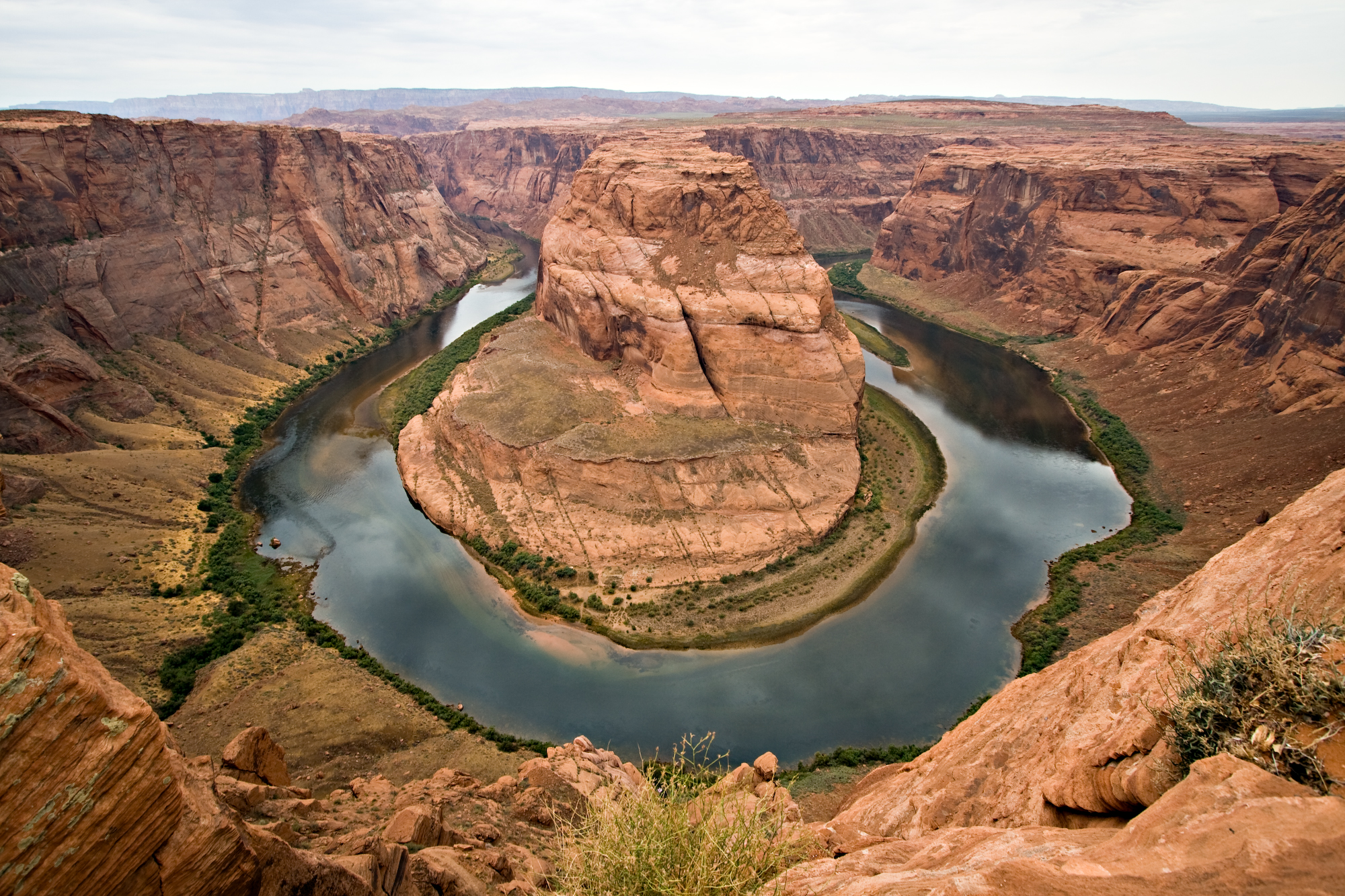
Hero photo: Horseshoe Bend on the Colorado River, by Luca Galuzzi, licensed under Creative Commons Attribution-ShareAlike 2.5.